The retail battlefield has fundamentally shifted. Store brands, once relegated to bottom shelves as cheap alternatives, now occupy premium positions and command prices rivaling national brands. This transformation reflects sophisticated strategies that leverage control, data, and customer relationships. Understanding how retailers deploy private labels reveals insights crucial for anyone navigating modern commerce.
What Advantages Do Retailers Possess Over National Brands?
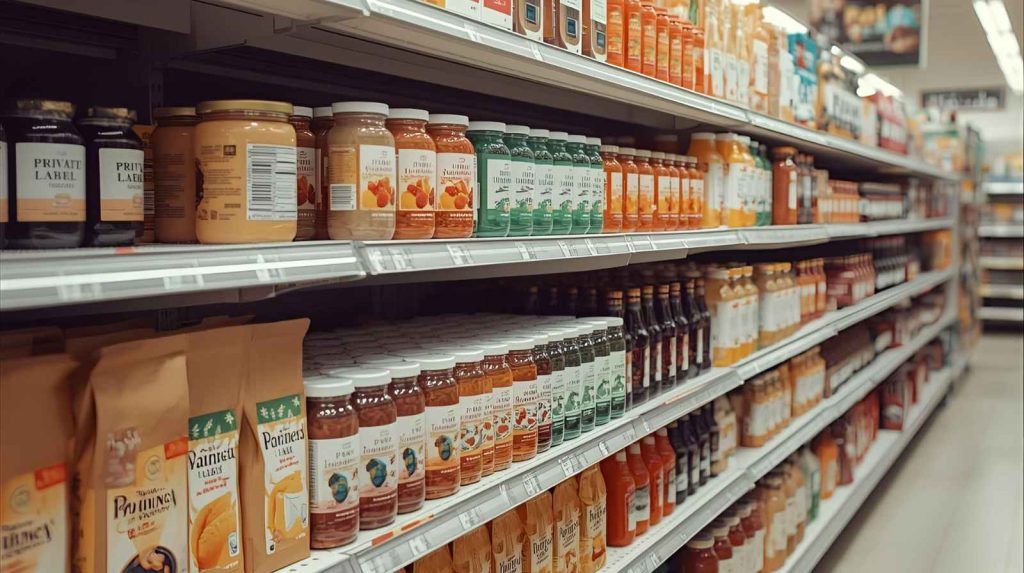
Retailers control something national brands can only dream of: the customer relationship and the shelf. This dual control creates asymmetric warfare where store brands dictate terms. When you walk into Target, the retailer decides product placement, promotional displays, and even whether national brands appear at all. This power allows store brands to engineer competitive advantages at every customer touchpoint.
According to Nielsen research, private label products now capture over 18% of U.S. retail sales, with some categories approaching 30% market share. This growth accelerates during economic uncertainty, but increasingly, consumers choose store brands even when budgets aren't constrained. Quality improvements have eroded the perception that private labels represent compromises.
Retailers also possess unprecedented customer data. Every purchase, every browsing session, every loyalty card swipe feeds algorithms that identify gaps and opportunities. National brands conduct market research; retailers live inside customer behavior continuously. This intelligence guides product development, pricing strategies, and marketing with precision impossible for traditional manufacturers.
How Do Retailers Leverage Lower Costs to Compete?
Cost structure is one of the biggest advantages of private label products. Unlike national brands that spend billions on advertising, celebrity endorsements, and massive distribution networks, private labels avoid these heavy costs. Traditional brands typically allocate 20–30% of product cost to marketing, which inevitably leads to higher retail prices. Store brands, however, take a smarter approach—relying on existing store traffic, strategic shelf placement, and genuine word-of-mouth instead of expensive campaigns.
Manufacturing efficiency adds another powerful edge. Today, retailers collaborate with advanced contract manufacturers serving multiple private label clients. This partnership allows them to achieve economies of scale comparable to national brands, while offering a level of flexibility that large corporations simply cannot match. For more than 15 years, Build Your Own Brand has been leading this evolution—developing, manufacturing, and exporting premium products worldwide, from herbal teas to health and beauty goods. Their experience demonstrates how specialized manufacturers can deliver both exceptional quality and operational efficiency. To learn more and explore real opportunities to create and grow your own brand, visit The website build-your-own-brand.com/.
Distribution is another area where private labels hold a clear advantage. National brands must navigate complex supply chains involving multiple intermediaries—distributors, wholesalers, and retailers—each taking a share of the profit. Private labels simplify this process by buying directly from manufacturers and utilizing existing store logistics. The result is substantial savings—often 15–25% of the final retail price—that can be passed on to consumers, reinvested in product quality, or maintained as added profit.
In essence, private labels thrive through efficiency, flexibility, and strategic partnerships. With trusted partners like Build Your Own Brand, retailers can offer high-quality, profitable products while maintaining full control over their brand and customer experience.
What Pricing Strategies Help Private Labels Compete?
Strategic pricing represents perhaps the most visible competitive weapon. Most retailers position private labels 20-40% below comparable national brands, creating instant value perception. This gap attracts price-sensitive customers while maintaining profitability through lower cost structures. The psychology is powerful: consumers feel smart choosing the store brand, converting savings into positive associations.
Sophisticated retailers deploy tiered pricing strategies. A typical supermarket might offer good-better-best private labels: a value tier competing on price, a standard tier matching national brand quality at lower prices, and a premium tier exceeding national brands in quality or features. This approach captures customers across the economic spectrum.
Dynamic pricing adds another dimension. Unlike national brands bound by distributor agreements, stores can adjust private label prices instantly in response to competition, inventory levels, or seasonal factors. This agility allows tactical responses impossible for traditional brands, particularly in perishable categories or seasonal products.
How Does Quality Control Differentiate Store Brands?
National brand defenders often claim quality advantages, but leading retailers have closed this gap aggressively. Companies like Costco and Trader Joe's maintain quality standards exceeding many national brands, understanding that disappointing customers permanently damages store credibility. Private label quality failures reflect directly on the retailer, creating powerful incentives for rigorous control.
Vertical integration enables proactive quality management. Retailers specify exact formulations, ingredients, and manufacturing processes, then audit compliance regularly. This hands-on approach contrasts with national brands, which often outsource manufacturing and conduct less frequent oversight. The result? Consistent quality that meets customer expectations reliably.
Testing and iteration happen faster with store brands. When customers complain or reviews highlight issues, retailers can reformulate products within months rather than the years required for traditional brand bureaucracies to respond. This agility transforms quality from static attribute to continuous improvement process.
What Role Does Innovation Play in Competition?
Innovative private labels attack national brand complacency directly. Research from McKinsey shows retailers increasingly use store brands to introduce novel products, sustainable options, or trending flavors before national brands react. This reversal—private labels as innovation leaders—represents a seismic shift in retail dynamics.
Category creation offers another innovation avenue. Trader Joe's invents entirely new product concepts that national brands couldn't risk developing. When innovations succeed, they become store exclusives that drive traffic and loyalty. National brands can only watch as store brands capture emerging trends profitably.
Sustainable and health-focused innovations exemplify private label leadership. Whole Foods' 365 launched organic options before many national brands committed to sustainability. Target's Good & Gather emphasizes transparency about ingredients and sourcing. These values-driven innovations attract conscious consumers increasingly skeptical of big brand marketing.
How Do Marketing Strategies Amplify Private Label Success?
Store brand marketing operates fundamentally differently than national brand campaigns. Rather than broad media buys, retailers leverage owned channels: store circulars, email lists, loyalty programs, and in-store displays. This targeted approach reaches high-intent shoppers cost-effectively, avoiding the waste inherent in mass marketing.
Social proof and reviews transform the marketing equation. When store brand products accumulate thousands of five-star reviews, skepticism evaporates. Retailers actively encourage reviews, knowing that customer testimonials persuade more effectively than any advertisement. User-generated content becomes the marketing engine driving trial and repeat purchase.
Brand storytelling has evolved beyond national brand territory. Target's designer collaborations create buzz; Costco's Kirkland mythology generates media coverage; Aldi's limited-time international products drive social media frenzy. These strategies build excitement rivaling national brand launches but at fraction of the cost.
What Does the Future Hold for Private Label Competition?
Private labels continue gaining share across virtually every category. As retailers perfect their strategies and consumers abandon brand loyalty rooted in advertising rather than experience, the balance tips further toward store brands. National brands maintain advantages in innovation, emotional connections, and specialized categories, but their dominance faces unprecedented challenges from retailers who understand their customers intimately and execute with increasing sophistication.